Mode of Analysis Used in Art History to Examine Works of Art
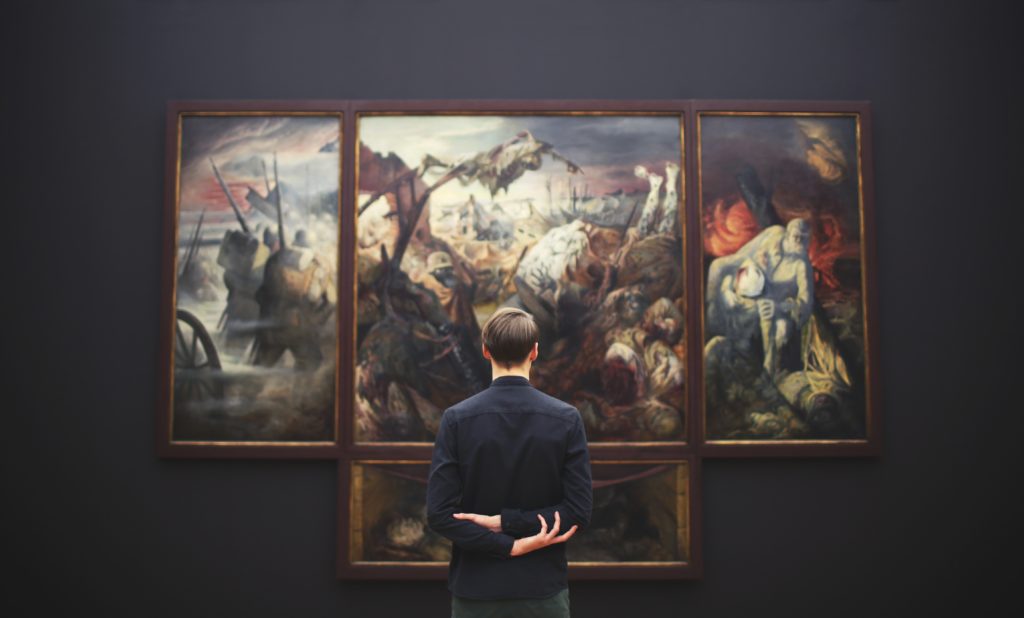
What is this Guide Helpful for?
Every piece of work of fine art is a complex organization and a pattern of intentions. Learning to observe and analyze artworks' nigh distinctive features is a task that requires time simply primarily training. Even the middle must be trained to art -whether paintings, photography, compages, drawing, sculptures, or mixed-media installations. The eyes, as when one passes from darkness to calorie-free, need time to adjust to the visual and sensory stimuli of artworks.
This brief compendium aims to provide helpful tools and suggestions to analyze art. It tin be useful to guide students who are facing a critical analysis of a detail artwork, as in the case of a paper assigned to loftier schoolhouse fine art students. But information technology can also exist helpful when the assignment concerns the creation of practical work, as it helps to reflect on the artistic practice of experienced artists and inspire their own work. Nevertheless, that's non all. These concise prompts can also assist those interested in taking a closer expect at the art exhibited by museums, galleries, and cultural institutions. They are general suggestions that can be practical to fine art objects of any era or fashion since they are those suggested by the history of art criticism.
Knowing exactly what an artist wanted to communicate through his or her artwork is an impossible chore, merely not fifty-fifty relevant in disquisitional assay. What matters is to personally interpret and understand it, always wondering what ideas its features suggest. The viewer's attention can autumn on different aspects of a painting, and dissimilar observers can even give contradictory interpretations of the same artwork. Withal the starting signal is the same setlist of questions. Here are the most common and effective ones.
How to Write a Successful Fine art Analysis
Limerick and Formal Analysis: What Can I See?
The first question to enquire in front of an artwork is: what practice I see? What is it made of? And how is it realized? Permit's limit ourselves to an objective, accurate pure description of the object; from this preliminary formal analysis, other questions (and answers!) will arise.
- You tin ask yourself what kind of object it is, what genre; if it represents something figuratively or abstractly, observing its overall style.
- You can investigate the composition and the form: shape (e.g. geometric, curvilinear, angular, decorative, tridimensional, human), size (is it small or large size? is information technology a choice forced by the limits of the display or non?), orientation (horizontally or vertically oriented)
- the apply of the space: the system of arrangement (is it symmetrical? Is there a focal point or emphasis on specific parts ?), perspective (linear perspective, aerial perspective, atmospheric perspective), infinite viewpoint, sense of full and voids, and rhythm.
- Yous tin notice its colors: palette and hues (cool, warm), intensity (brilliant, pure, dull, glossy, or grainy…), transparency or opacity, value, colors furnishings, and choices (e.1000. complementary colors)
- Discover the texture (is it flat or tactile? Has it other surface qualities?)
- You can analyze the study of light (chiaroscuro, tonal modeling, light sourcing, atmosphere)
- or the type of lines (horizontal, vertical, implied lines, cluttered, underdrawing, contour, or leading lines)
After completing this ascertainment, it is important to ask yourself what are the effects of these chromatic, compositional, and formal choices. Are they the result of randomness, limitations of the site, display, or textile? Or maybe they are meant to convey a specific idea or overall mood? Does the artwork back up your insights?
Media and Materials: How the Creative person Create?
- First of all, the medium must be investigated. What are these objects? Compages, drawing, film, installation, painting, performing art, photography, printmaking, sculpture, sound art, textiles, and more.
- What materials and tools did the artists apply to create their work? Oil paint, acrylic paint, charcoal, pastel, tempera, fresco, marble, bronze, but as well concrete, drinking glass, stone, forest, ceramics, lithography…The list of materials is potentially endless, especially in gimmicky arts, but it is besides amid the easiest data to discover! A valid itemize or museum label will always list materials and techniques used by artists.
- What techniques, methods, and processes are used past the artist? The aforementioned goes for materials, techniques are numerous and often related to the overall feeling or fashion that the artist has set out to attain. In a disquisitional analysis, it is of import to reverberate on what this technique entails. Exercise not overdo with a verbose technical explanation.
Why did the creative person choose to make the work this style and with such features (materials and techniques)? Are they traditional, bookish techniques and materials or, on the contrary, innovative and experimental? What idea does the artist communicate with the option of these media? Try to reverberate, for case, on their preciousness, or cultural significance, or even durability, fragility, heaviness, or lightness.
Context, Biography, Purpose: What's Outside the Artwork?
Through formal analysis, it is possible to obtain a precise description of the artistic object. However, artworks are besides documents, which attest to facts that happen or have happened outside the frame! The artwork relates to themes, stories, specific ideas, which vest to the creative person and to the society in which he or she is immersed. To analyze fine art in a relevant manner, we also must consider the context.
- What are the intentions of the artist to create this work? The purpose? Art may be deputed, commemorative, educational, of practical use, for the public or for private individuals, realized to communicate something. Let'south ask ourselves why the artist created information technology, and why at that item time.
- The artist's life besides cannot be overlooked. We ever look at the piece of work in the low-cal of his biography: in what moment of life was it made? Where was the creative person? What other artworks had he/she washed in close temporal proximity? Biographical sources are invaluable.
- In what context (historical, social, political, cultural) was the artwork made? Artwork supports (or may even deliberately oppose) the climate in which information technology is immersed. Find out nigh the political, natural, historical event; the economical, religious, cultural situation of its flow.
- Of paramount importance is the cultural atmosphere. What artistic movements, currents, fashions, and styles were prevalent at the time? This allows us to brand comparisons with other objects, to question the taste of the time. In other words, to open up the horizons of our analysis.
Subject and Meaning: What does it Want to Communicate?
We observed artwork every bit an object, with visible material and formal characteristics; then we understood that it tin be influenced by the context and intentions of the creative person. Finally, information technology is essential to investigate what it wants to communicate. The content of the work passes through the bailiwick affair, its stories, implicit or explicit symbolism.
- You lot can preliminarily ask what genre of artwork it is, which is very helpful with paintings. Is it a realistic painting of a landscape, abstract, religious, historical-mythical, a portrait, a even so life, or much else?
- You can ask questions nigh the title if it is present. Or peradventure question its absence.
- You can observe the figures. Ask yourself most their identity, age, rank, connections with the creative person, or cultural relevance. Observe what their expression or pose communicates.
- You tin can also observe the objects, places, or scenes that take place in the piece of work. How are they depicted (realistic, abstract, impressionistic, expressionistic, primitive); what story do they tell?
- Are there concepts that perhaps are conveyed implicitly, through symbols, allegories, signs, textual or iconographic elements? Practise they have a precise meaning inserted there?
- You tin can try to describe the overall feeling of the artwork, whether it is positive or negative, simply likewise go deeper: does it communicate calmness, melancholy, tension, energy, or anger, shock? Try to listen to your ain emotional reaction as well.
Subjective Interpretation: What does it Communicate to Me?
And finally, the crucial question, what did this piece of work spark in me?
Nosotros can talk about aesthetic taste and feeling, merely not simply. A disquisitional judgment as well involves the degree of effectiveness of the work. Has the artist succeeded, through his formal, technical, stylistic choices, in communicating a specific idea? What did the critics recall at the time and ask yourself what you lot think today? Are there whatever temporal or personal biases that may affect your judgment? Significative artworks are capable of speaking, of telling a story in every era. Whether nice or bad.
A Cursory History of Art Criticism

The stimulus questions nerveless hither are the event of the experience of different methods of analysis developed by art critics throughout history. Art criticism has adult different analytical methodologies, placing the focus of enquiry on dissimilar aspects of art. Nosotros tin can trace 3 major macro-trends and all of them can be used to develop a personal critical method:
The Formal Art Analysis
Formal fine art analysis is conducted primarily by connoisseurs, experts in attributing paintings or sculptures to the hand of specific artists. Formal analysis adheres strictly to the object-artwork past providing a pure description of it. It focuses on its visual, most distinctive features: on the subject, limerick, material, technique, and other elements. Famous formalists and purovisibilists were Giovanni Morelli, Bernard Berenson, Roberto Longhi, Roger Fry, and Heinrich Wölfflin, who elaborated different categories of formal principles.
The Iconological Method
In the iconological method, the content of the work, its meaning, and cultural implications brainstorm to have on relevancy. Aby Warburg and afterwards the Warburg Institute opened up to the analysis of art as an interdisciplinary discipline, questioning the correlations between fine art, philosophy, culture. The fortune of the iconological method, nevertheless, is due to Erwin Panofsky, who observed the artwork integrally, through three levels of interpretation. A first, formal, superficial level; the second level of observation of the iconographic elements, and a 3rd chosen iconological, in which the analysis finally becomes deep, trying to grasp the pregnant of the elements.
Social Fine art History and Beyond
Then, in the 1950s, a third trend began, which placed the focus primarily on the social context of the artwork. With Arnold Hauser, Francis Klingender, and Frederick Antal, the social history of fine art was born. Social art historians conceive the work of art every bit a structural organisation that conveys specific ideologies, whose aspects related to the fourth dimension period of the artists must also exist investigated. Analyses on commissioning, institutionalization, production mechanisms, and the role and part of the creative person in order began to spread. It also opens fine art criticism to researches on taste, fruition, and the study of art in psychoanalytic, pedagogical, anthropological terms.
10 Art Analysis Tips
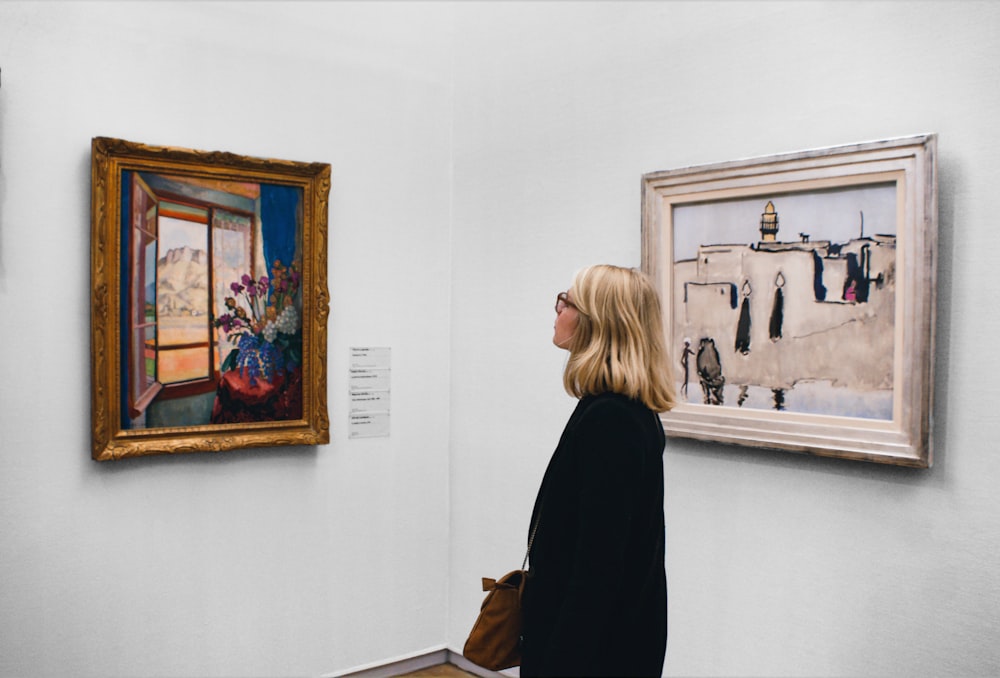
Nosotros defined the questions you need to inquire yourself to write a meaningful artwork assay. Then, we identified the main approaches used by art historians while criticizing art: formal analysis, iconographic interpretation, and study of the social context. However, art interpretation is always open to new stimuli and insights, and it is a work of continuous training.
Here are ten aspects to keep in mind when observing a proficient artwork (or a bad ane!):
- Any feeling towards a work of art is legitimate -whether it is a painting, picture, sculpture, or contemporary installation. What do you like or dislike almost it? You could write about the shapes and colors, how the artist used them, their technique. You tin clarify the museum setting or its original location; the ideas, or the cultural context to which the artist belongs. You tin can recollect about the feelings or memories it evokes. The important matter is that your judgment is justified with relevant arguments that strictly relate to the artwork and its elements.
- Analyzing does not hateful describing. A precise description of the work and its distinctive features is essential, but nosotros must go across that. Consider also what is outside the frame.
- Strive to use an inquiry-based approach. Ask yourself questions, beginning with objective ascertainment and then get deeper. Wonder what features suggest. Notice a color…well, why that color, and why there?
- Discover a broad range of visual elements. Artworks are complex systems, so endeavor to expect at them in all their components. Not simply color, shapes, or technique, but also rhythm, compositional devices, emphasis, style, texture…and much more!
- To get a visual analysis as accurate as possible, information technology might exist very useful to have a comprehensive glossary. Here is MoMA's one: https://www.moma.org/momaorg/shared/pdfs/docs/learn/courses/Vocabulary_for_Discussing_Art.pdf and Artlex: https://world wide web.artlex.com/art-terms/
- Less is more. Do yous want to write about an entire artistic motility or a particularly prolific creative person? Focus on the most meaning works, the ones you can actually say something personal and effective about. Similarly, cull only relevant and productive information; it should aid better agreement of the objects, not take the reader away from it.
- Back up what you write with images! Accompany your text with sketches or high-quality photographs. Choose blackness and white pictures if you want to highlight forms or lights, details or evidence inside the artwork to support your personal interpretations, objects placed in the art room if you analyze also curatorial choices.
- See equally much live artwork as possible. Whenever you can, attend temporary exhibitions, museums, galleries… the richer your visual background volition be, the more attentive and receptive your eye will exist! Connections and comparisons are what make an art criticism truly rich and open-minding.
- Exist inspired by the words of artists, art experts, and creatives. Listen as a beloved artwork relates to their art exercise or personal creative vision, to build your personal i. Here are other helpful links: https://www.moma.org/mag/articles/154?=MOOC
- And finally, trust your intuition! As you lot noticed in this decalogue, numerous aspects require study and rational analysis but don't forget to formalize your instinctive impressions as well. Art is made for that, too.
Source: https://www.artlex.com/formal-art-analysis/
0 Response to "Mode of Analysis Used in Art History to Examine Works of Art"
Post a Comment