The More That You Read the More You Will Know
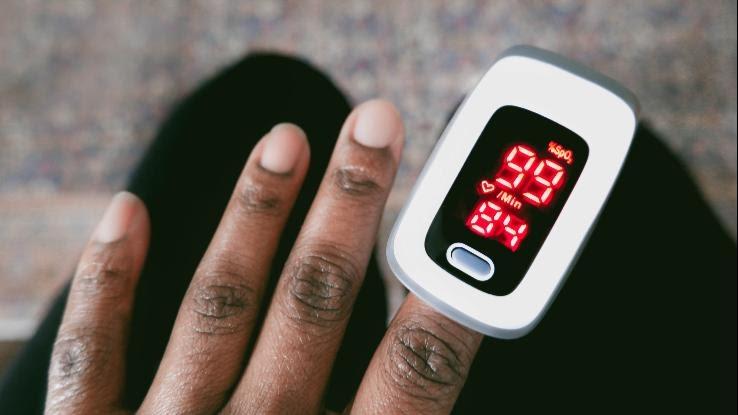
Pulse oximetry measures how much oxygen is existence carried by i'southward blood throughout their body while their middle is pumping. So, how is this measured? Namely through pulse oximeters, small devices that are used in hospitals, clinics and homes to measure heart charge per unit and blood oxygen saturation.
Different a clinical blood examination, pulse oximeters allow for near-instant results — and they're completely not-invasive. Just slip the device on the finish of your finger or toe and yous'll have results in seconds. Outset developed back in 1974 by Japanese bioengineer Dr. Takuo Aoyagi, pulse oximeters were made commercially available for at-home monitoring in 1995. Since then, personal pulse oximeters accept allowed folks with lung, animate and middle weather condition to track their own readings and monitor their daily levels. So, how practise these wondrous devices work?
Pulse oximeters are made up of two components: a sensor unit and a display. The sensor unit of measurement measures one'due south pulse (or eye rate) too as the oxygen saturation of one'southward blood.

Pulse (or Heart Rate): Your pulse is the charge per unit at which your eye beats. It is unremarkably listed as beats per minute (bpm). The oximeter's probe detects the flow of blood through whatsoever office of the trunk it is clipped to — usually the end of a finger or toe (and, in some cases, an earlobe). The display on the oximeter volition present the pulse data in 2 ways: a pulse wave signal that will prove how regular, erratic, weak said pulse is, and as a number, which specifies the wearer's bpm.
Blood Oxygenation: Pulse oximeters apply calorie-free-emitting diodes (LEDs) that projection two types of red light into the tissue of the wearer's finger, toe or ear. I side of the oximeter will hold the LED that projects that light; the other side of the oximeter will include a sensor that detects the light that has travelled through the wearer's flesh. The oximeter then calculates what percentage of your claret is conveying oxygen by measuring the change in the absorption of light by oxygenated blood (that is, the blood that'southward conveying oxygen) and deoxygenated blood (blood that does not contain oxygen). The result will be displayed as a measure of Blood Oxygen Saturation (referred to as SpO2), which is given as a per centum.
In addition to being used to measure ane's performance under stress or track their daily health, pulse oximeters are used to monitor vital signs during surgery, specially while you're under anesthesia. Apart from personal devices, blood oxygenation measurements can be calculated in clinical settings through an arterial blood gas (ABG) exam. Although this ABG examination is extremely precise, information technology'south much more than invasive than a personal pulse oximeter. In short, at-habitation pulse oximeters empower y'all to manage your own health and, while they shouldn't be used for diagnostic purposes, their immediacy tin can certainly aid you stay informed and aware.
Interpreting Pulse Oximeter Readings
And so, how do you lot know what your readings hateful? The Mayo Clinic suggests that the normal resting pulse rate for adults should autumn betwixt threescore and 100bpm. That'southward a pretty wide range — and one that accommodates for variation in gender, age, weight, level of physical activity and more. Generally speaking, a pulse charge per unit at the lower end of that range means that your heart is functioning more than efficiently than a heart that is required to shell more often each minute while at rest.

At a certain indicate, though, lower is non ameliorate. The medical status bradycardia is when one's resting heart charge per unit is unusually low — that is, at or below 60bpm. Bradycardia's symptoms include memory challenges, fainting, tiredness and breast hurting.
So, what about claret oxygenation? As you may know, your blood carries oxygen from your lungs to cells throughout your body. The delivery of oxygen at the right levels is essential to life and health. The air that we typically breathe contains approximately 21% oxygen. Standard blood oxygen saturation — in someone without lung disease — is typically between 95% and 100% when measured with an oximeter and expressed every bit SpO2. When measured via an ABG, which expresses results in mmHg, standard blood oxygen saturation is between eighty and 100 mm Hg. Typically, a SpO2 reading of below 95% is considered low.
Breathing oxygen at likewise high a concentration causes hyperoxia, a potentially dangerous condition that can cause damage to your lung tissue. On the other hand, not getting enough oxygen can cause hypoxemia. Symptoms of hypoxemia include headaches; shortness of breath; rapid heart rate; coughing and wheezing; mental confusion; and a blueish tinge to your skin and lips. The consequences of hypoxemia range from relatively minor — frequent headaches and shortness of breath — to extremely severe in extreme cases, such as an interference with center function. Hypoxemia can stem from many factors, including centre and lung weather condition; asthma and emphysema; high altitudes; sure pain medications; and slumber apnea. Co-ordinate to the United States Nutrient & Drug Administration (FDA), severe cases of the flu and COVID-19 may also crusade oxygen levels to drop to the point where supplemental oxygen is required.
Of course, these figures are generalizations and don't take into account 1's specific health atmospheric condition, like chronic obstructive pulmonary affliction (COPD) or other lung disorders, which might impact blood saturation. For that reason, oximeter readings taken at home should never be relied on for diagnostic purposes or to decide treatment. If you are concerned by your at-habitation readings, seek medical advice to understand what those readings bespeak in the larger context of your health.
Resource Links:
- "Pulse Oximetry" via the Mayo Dispensary
- "Pulse Oximeters and Oxygen Concentrators: What to Know About At-Home Oxygen Therapy" via United States Food & Drug Administration (FDA)
Source: https://www.symptomfind.com/health/interpret-pulse-oximeter-readings?utm_content=params%3Ao%3D740013%26ad%3DdirN%26qo%3DserpIndex
0 Response to "The More That You Read the More You Will Know"
Post a Comment